The Rhine–Neckar 1992
2026
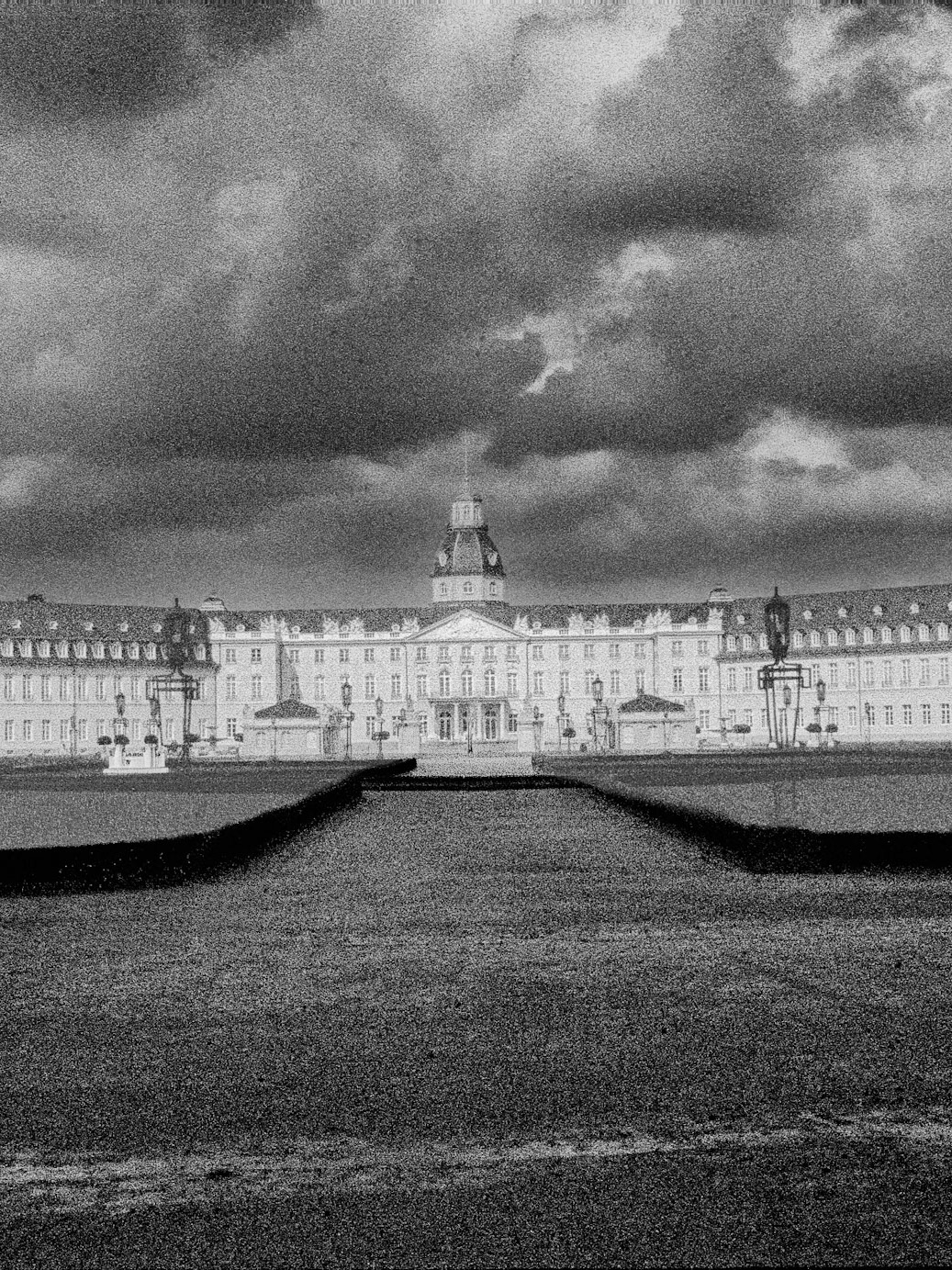
These photographs were taken in 1992 while I was living in Reilingen and working in Heidelberg. What was then a casual day out—most likely showing visitors around the region—has, in retrospect, become something quite different.
Stripped of colour and revisited in black and white, the images reveal a consistent way of seeing that I was not consciously aware of at the time. The camera is drawn not to people, but to structure: the formal symmetry of Karlsruhe Palace, the solidity of Speyer Cathedral, and the layered streets and walls of Bad Wimpfen. Human presence is incidental, often absent, leaving architecture and space to carry the narrative.
Across the sequence there is a quiet progression—from grand, ordered spaces to more intimate and enclosed settings. The images move from the monumental to the vernacular, from designed geometry to the irregular textures of an old town. Seen together, they form a visual journey through place, but also through time: a record of where I was, and an early expression of the photographic language I continue to explore today.
1998 Cyprus
2026
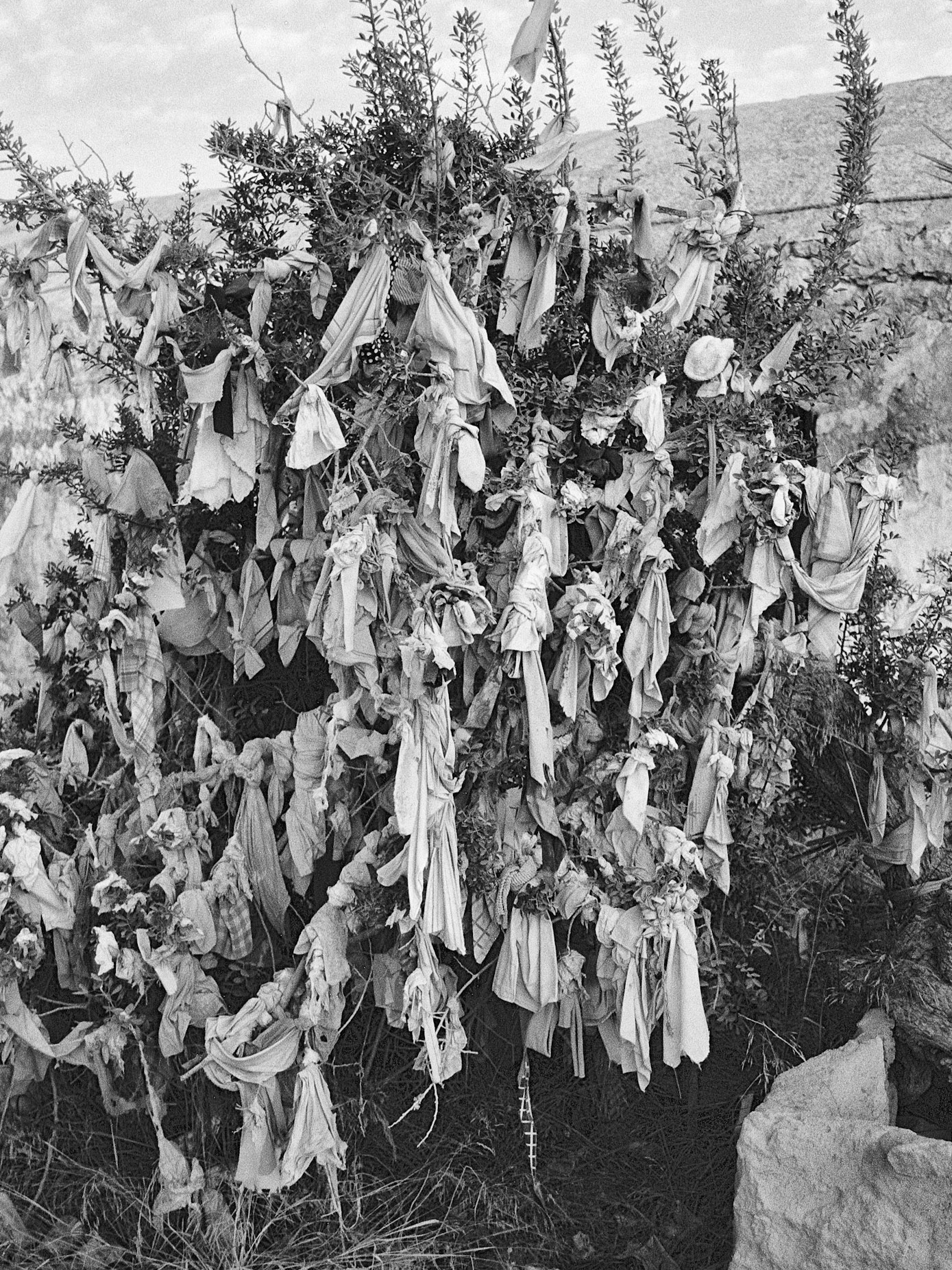
This collection of images dates from a trip to Cyprus in 1998, photographed on Kodak Gold 400 film. At the time, my photography was still exploratory—an instinctive response to place rather than a fully developed style. Looking back, I can see a consistent intention: a fascination with light, landscape, and the challenge of photographing into the sun. Although many exact locations have been lost, several images within this collection can be confidently placed. The distinctive coastal amphitheatre has been identified as the Kourion Theatre near Limassol, while a series of rock-cut interiors closely match the Catacombs of Saint Solomoni in Paphos. Other architectural images, particularly of small hillside chapels, are consistent with churches dedicated to Agios Georgios (St George), common throughout the region.
Together, these locations suggest that the photographs trace a journey along the south-west coast of Cyprus, moving between Paphos and Limassol and into the surrounding rural landscapes. What initially appeared as a loosely documented set of images now begins to resolve into a more coherent geographical narrative.
The original negatives, now digitised at high resolution, carry all the visual signatures of their era. Colours are rich and heavily saturated, sometimes to the point of exaggeration, reflecting both the film stock and the processing of the time. Grain is prominent, particularly in shadow areas, and the dynamic range is limited—bright skies often dominate while foreground detail falls away into darkness. These are not technical flaws to be corrected, but characteristics that define the images and anchor them firmly in their period.
What is perhaps more interesting, with the benefit of hindsight, is the intent behind the photographs. Many of these images are attempts at “making” pictures rather than simply taking them—seeking out compositions, framing subjects against strong light, and experimenting with contrast and silhouette. There is an emerging awareness of mood and atmosphere, even if the technical control was not always there to fully realise it.
Revisiting these images now is not about perfection, but about reinterpretation. With contemporary tools and a more developed photographic eye, there is an opportunity to rework these scenes—moving away from their original colour towards black and white, where light, structure, and form can take precedence over the bold palette of the film.
These photographs are therefore presented not just as a record of a place, but as a record of a stage in a photographic journey—one that began with curiosity, experimentation, and a strong attraction to light, and continues today with a different set of tools, but many of the same underlying questions.